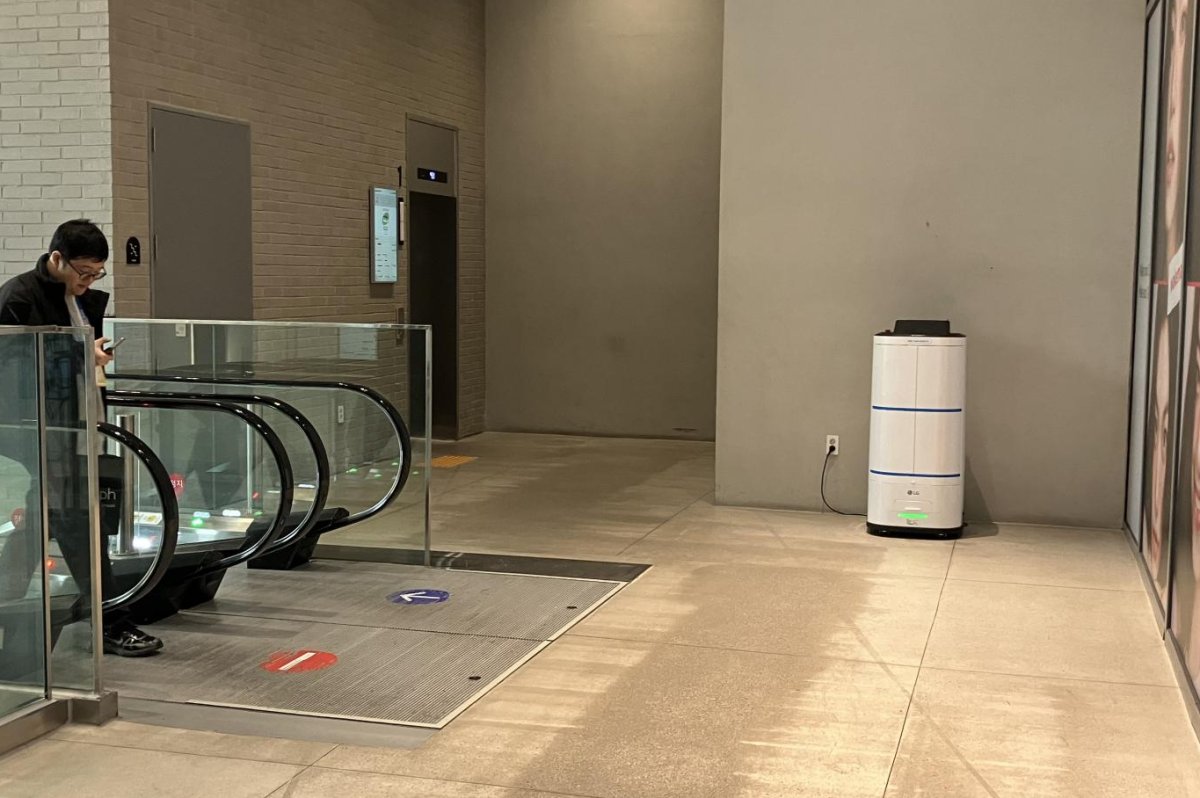
Kakao Mobility’s BRING delivery robot is shown at Noudit Seoul Forest building in Seoul’s Seongsu-dong district on March 17, 2026. Photo by Hyojoon Jeon / UPI
March 16 (Asia Today) — Kakao Mobility said Sunday that its robot-based hotel delivery service has significantly improved operational efficiency and boosted revenue at participating hotels.
The company said it partnered with autonomous robotics firm Robotis to introduce robot delivery services at major hotels in South Korea and establish a commercial operating model.
The two companies signed an agreement in 2024 to develop a platform-based indoor and outdoor delivery robot service. The technology has since been deployed at premium hotels including Shilla Stay Seocho and Banyan Tree Club & Spa Seoul.
Kakao Mobility said the service increased the average daily utilization rate of delivery robots roughly eightfold compared with the initial launch phase. Delivery success rates also reached 100% as system improvements reduced failed deliveries.
The company said the automation has reduced waiting time and repetitive tasks for hotel employees, allowing staff to focus more on customer service and other higher-value duties.
Hotels using the system have also reported higher sales. One hotel recorded a threefold increase in room service revenue after integrating a QR code ordering system with the robot delivery platform.
Kakao Mobility said the results show that robots can evolve beyond simple efficiency tools into revenue-generating systems capable of creating new income streams.
The company attributed the performance gains to integrating robots and service infrastructure into a unified platform. The system includes integrated robot control, security monitoring, fault management and infrastructure management while linking robots, hotel staff and building facilities.
The platform also uses a transportation management system to run real-time demand and supply prediction algorithms. Orders are sorted automatically and assigned to robots based on forecast demand, robot capabilities and estimated arrival times to optimize dispatching.
Kakao Mobility also provides operational consulting services to clients. Workflows are broken down by delivery scenario and operating structures are tailored to each client’s service priorities.
Industry observers say many robot deployments struggle because operational processes are not designed for real-world environments, resulting in low utilization rates or limited demonstration-type services.
Kakao Mobility said it focused on designing operational structures rather than simply connecting delivery orders to robot hardware.
The company plans to expand its platform-based robotics ecosystem by strengthening partnerships with domestic robotics companies including Robotis, LG Electronics and Bear Robotics.
Future deployments are expected in hospitals, residential complexes, offices and logistics facilities.
Kim Jin-kyu, head of Kakao Mobility’s Physical AI division, said robot platforms help bridge the gap between manufacturers’ technology and real-world operational needs.
“We will support the expansion of Korea’s robotics ecosystem using mobility technologies we have developed, including data-driven demand forecasting, supply-demand optimization and routing,” Kim said.
— Reported by Asia Today; translated by UPI
© Asia Today. Unauthorized reproduction or redistribution prohibited.
About the Author