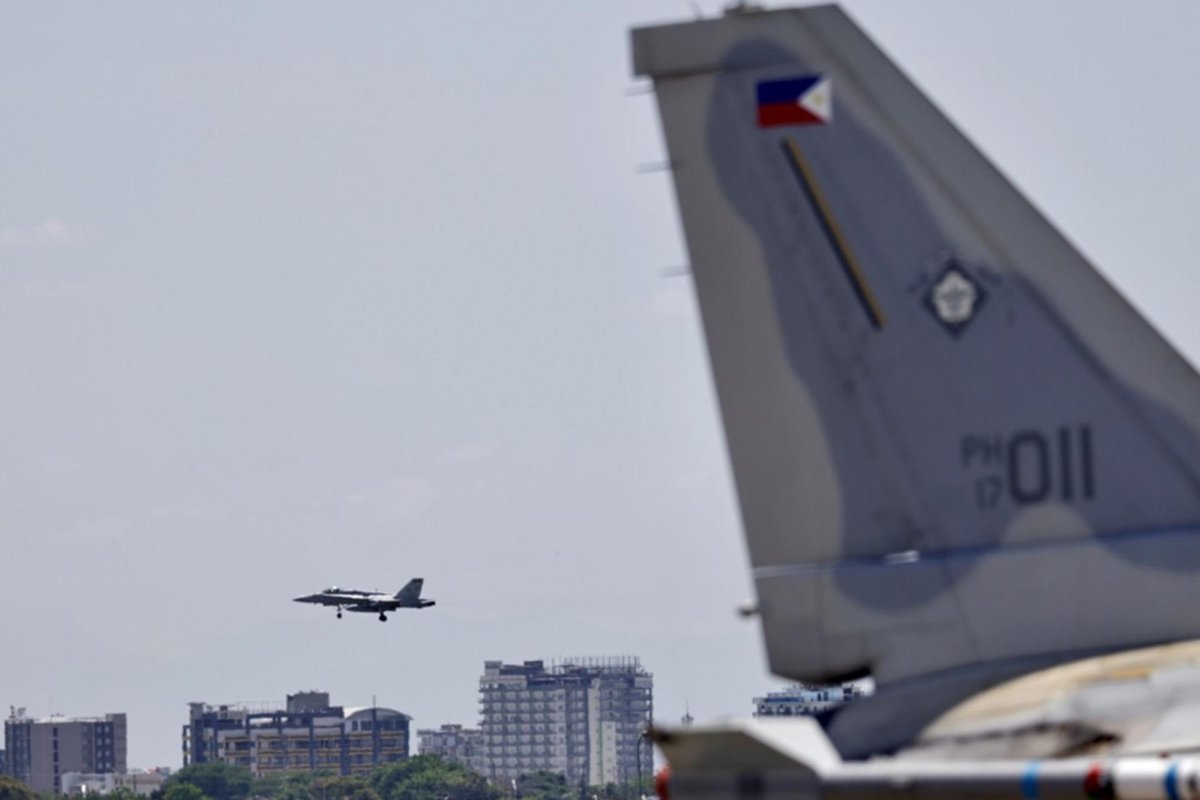
A United States Air Force (USAF) F-16 fighter jet flies next to a Philippine Air Force (PAF) FA-50 fighter jet during the Cope Thunder bilateral exercise opening ceremony inside a military airbase in Angeles city, Pampanga province, Philippines. File. Photo by FRANCIS R. MALASIG / EPA
April 1 (Asia Today) — Plans to deploy Japanese Self-Defense Forces to the Philippines for joint military exercises have sparked backlash, with activists and victims’ groups demanding a formal apology over wartime abuses before expanding military cooperation.
According to regional media reports Wednesday, Japanese combat units are set to participate in the annual Balikatan exercises in the Philippines this month. It will mark the first time since the end of World War II that Japanese forces enter Philippine territory in a combat role.
The deployment follows the ratification of a reciprocal access agreement between Japan and the Philippines last year, allowing troop visits and the movement of military equipment between the two countries.
However, Filipino civil society groups and organizations representing victims of Japan’s wartime sexual slavery system have voiced strong opposition. They argue that Japan has yet to issue a clear, official state apology or provide compensation for wartime abuses.
Sharon Cabusao-Silva, an official with Lila Filipina, said only 19 of the roughly 200 Filipino victims who filed a lawsuit in Tokyo in 1993 remain alive. She said their key demands – an official apology, state compensation and inclusion of the issue in school textbooks – have not been fulfilled.
Critics also raised concerns that the bilateral access agreement could allow Japan to expand its military footprint in the Philippines, potentially conflicting with Japan’s pacifist constitution and raising fears of increased militarization in the region.
Some activists dismissed past statements by former Japanese leaders as insufficient, describing them as personal expressions rather than formal government policy. They also cited the 2017 removal of a “comfort women” memorial in Manila, which they say reflected political pressure from Tokyo.
Teresita Angsi, a Philippine civic leader, warned against granting Japan expanded military access, saying historical accountability must come first. “We may forgive, but we must not forget what Japan did during World War II,” she said.
The Japanese government maintains that historical issues have been addressed through past apologies and agreements. Japan’s ambassador to the Philippines said previous leaders had expressed remorse and that compensation matters were legally resolved under the postwar peace treaty framework.
Still, the issue remains contentious. Carl Ian Cheng Chua, a historian at Ateneo de Manila University, said the Philippines should approach Japanese security assistance with caution, arguing that Tokyo’s expanding defense role could signal a broader shift toward rearmament.
The development highlights growing tensions between historical memory and evolving security cooperation in Asia, as countries deepen military ties amid rising regional threats.
— Reported by Asia Today; translated by UPI
© Asia Today. Unauthorized reproduction or redistribution prohibited.
About the Author